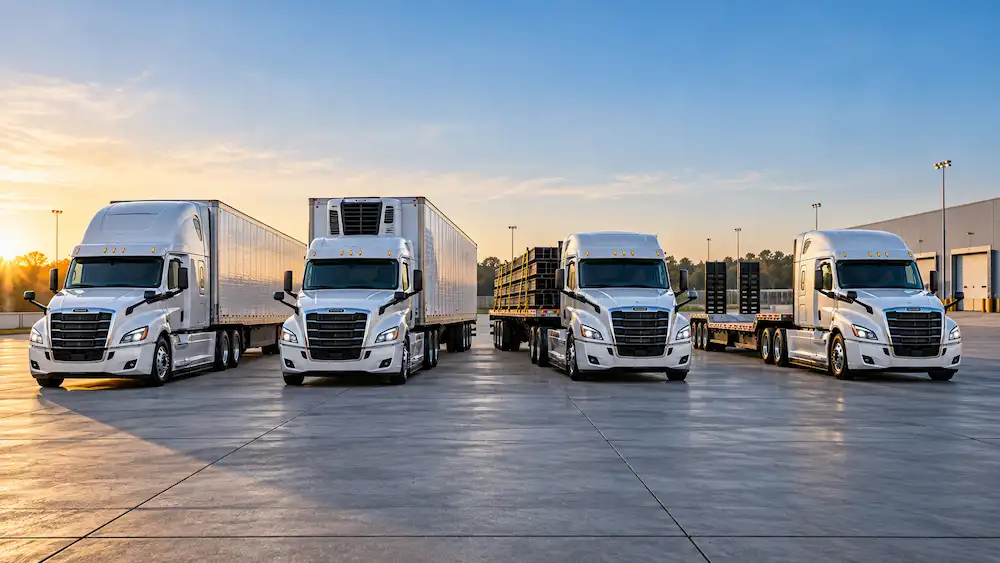
If you’re an owner-operator, every hour you spend on load boards, on the phone with brokers or chasing paperwork is an hour you’re not driving. That’s the job a truck dispatcher takes off your plate. Here’s what a dispatcher actually does, step by step.
1. Finding the right load
It starts with the search. A dispatcher works the load boards and their broker contacts to find freight that fits your truck — your equipment type, the lanes you like to run, your minimum rate per mile and when you need to be home.
A good dispatcher also thinks one load ahead. A high-paying load that drops you somewhere with no freight back out isn’t a great load. Planning back-to-back loads keeps empty (deadhead) miles down and your weekly revenue up.
2. Negotiating the rate
Posted rates are a starting point, not the final number. Before anything gets booked, your dispatcher negotiates with the broker using what the lane is really paying right now. This is also the moment to agree on accessorials — like detention after free time — so they’re written into the rate confirmation instead of argued about later.
3. Running it by you
This is the step that separates a dispatcher who works for you from one who just fills your schedule. At Load & Go, we send you the load details first: pickup and delivery, miles, weight and rate. If you say “book it”, we book it. If you don’t like it, we keep looking. Nothing gets booked without your OK.
4. Booking it and handling the paperwork
Once you approve, the dispatcher books the load and takes care of the documents:
- Broker setup — completing the broker’s carrier packet with your authority, insurance certificate and W-9.
- The rate confirmation (RC) — checking that the rate, pickup and delivery times, detention terms and any special requirements match what was agreed, then signing it on your behalf.
- Load details for you — addresses, appointment times, reference numbers and any special instructions, sent before you roll.
Tip: the rate confirmation is the contract for the load. If something isn’t on the RC — like detention pay — it’s much harder to collect later. That’s why we check it line by line before signing.
5. Staying in contact with you and the broker
From pickup to delivery, the dispatcher is the go-between. Brokers want updates; drivers want to drive. Your dispatcher handles check calls, passes along delays, deals with appointment changes and keeps the broker informed — so you’re not stuck on the phone behind the wheel.
6. Detention and layover
Waiting at a shipper for hours, or getting held over to the next day, costs you money. A dispatcher tracks your arrival and departure times, warns the broker before free time runs out and submits the detention or layover claim with the right documentation. (We wrote a full guide on getting paid for detention and layover.)
7. Billing and factoring
After delivery, the paperwork has to go out fast for you to get paid fast. Your dispatcher prepares the invoice and sends it — with the rate con, signed BOL and proof of delivery — to your factoring company or directly to the broker. Missing or blurry documents are one of the most common reasons payments get delayed, so getting this step right matters. (More on that in our factoring guide.)
What a dispatcher doesn’t do
A dispatcher is not a freight broker and not a motor carrier. You keep your own authority, your own broker relationships and full control of your truck. The dispatcher works on your behalf — you decide which loads you haul.
Is a truck dispatcher worth it?
It comes down to time and rates. If a dispatcher saves you hours every week and negotiates better pay than you’d get on your own, the fee pays for itself. The structure of that fee matters too — compare options in our guide to how much truck dispatching costs.
At Load & Go, it’s a flat 7% of the gross per load, there’s no contract, and we don’t charge anything until the broker pays you.